Key Takeaways:
- Proper crown prep directly impacts both marginal fit and long-term esthetic success
- Lab expertise in preparation assessment can prevent costly remakes and adjustments
- Margin design choices significantly influence restoration longevity and tissue health
- Collaborative preparation planning between dentist and lab optimizes final outcomes
Every crown preparation tells a story. Some highlight precision, foresight, and collaborative planning, resulting in restorations that fit beautifully and stand the test of time. Others show the effects of rushed decisions, compromised margins, and avoidable complications. More often than not, the difference comes down to how preparation choices shape both the immediate fit and the long-term esthetic outcome.
For practices focused on delivering exceptional results, crown prep isn’t just about removing tooth structure. It’s about creating the foundation for predictable excellence. When dentists view their lab partner as a consultant rather than just a vendor, the preparation phase becomes an opportunity to prevent problems before they start.
The Foundation of Success: Why Crown Preparation Matters
Here’s the thing about crown prep quality. It’s not just dental theory. It actually makes a difference in how restorations turn out. Studies have shown that preparation design directly influences marginal fit, with marginal gaps ranging from 71–80 microns depending on preparation technique. While these differences might seem small, they turn into significant variations in clinical performance, especially when patients are counting on crowns that not only look great, but also provide long-lasting results.
What makes preparation so critical extends beyond basic fit considerations. The margins you create determine tissue response, plaque retention, and long-term stability. They influence how light interacts with the restoration, affecting color matching and translucency. Perhaps most importantly, they set the stage for either seamless integration or ongoing maintenance challenges.
Modern digital workflows have amplified the importance of precision in crown prep. While traditional wax-up techniques could compensate for some preparation irregularities, CAD/CAM systems reproduce exactly what they’re given. This creates opportunities for exceptional outcomes when preparations are ideal, but also exposes deficiencies that might have been masked by conventional fabrication methods.
The Margin Game: Choosing Your Design Strategy
Margin selection impacts everything from tissue health to esthetic integration. Research shows about 65% of practitioners prefer chamfer margins for posterior crowns, while preferences shift for anterior work where distinct shoulder margins often provide better scanning clarity.
The chamfer margin is the most versatile, and technically very simple to restore. The smooth transition works well for VPS, poly ether, and intraoral scanning. All restorative options, including lithium disilicate, monolithic Zr, and layered ceramics – PFZ and PFM, work well with this type of margin.
Shoulder margins provide unambiguous boundaries that CAD/CAM systems reproduce precisely. That 90-degree angle eliminates scanning interpretation errors. The tradeoff is more aggressive reduction, and high strength indirect restorative materials have overcome the need for aggressive margin reduction.
Digital Demands: How Technology Changes the Crown Prep Game
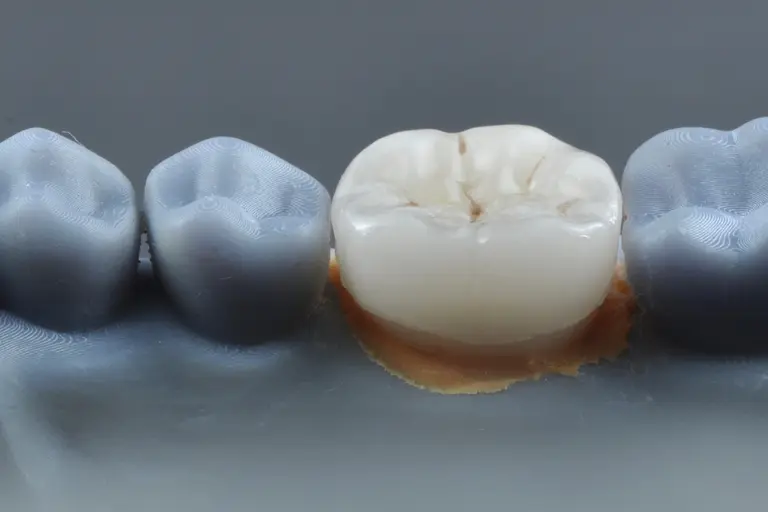
The shift to digital dentistry has fundamentally altered crown prep requirements. Traditional impression techniques could accommodate minor preparation imperfections through material flow and technician adjustment. Digital scanning systems capture exactly what exists, eliminating the forgiving nature of conventional methods.
This precision creates new opportunities and challenges. Ideal preparations result in better-fitting restorations with less chairside adjustment time. However, preparation errors that might have been manageable with traditional techniques can become problematic in digital workflows.
Scanning accuracy depends heavily on clear, well-defined margins. Rough, indistinct, or tissue-obscured margins create reconstruction errors that propagate through the entire digital workflow. Studies comparing impression techniques show that digital impressions can achieve better marginal fit when preparations are optimal, but they’re less forgiving of preparation deficiencies than conventional methods.
The Art of Reduction: Balancing Conservation and Function
Adequate tooth reduction represents a balancing act between preserving tooth structure and providing sufficient space for durable, esthetic restorations. Too little reduction compromises material thickness, leading to bulk and potential fractures. Too much reduction risks pulp exposure and weakens the remaining tooth structure.
The challenge intensifies when considering material-specific requirements. Zirconia crowns need different reduction patterns than lithium disilicate restorations. Anterior esthetics demand different considerations than posterior function. Understanding these nuances separates routine preparations from strategic ones.
Digital design software provides new tools for evaluating reduction adequacy. Virtual thickness analysis can identify areas of insufficient reduction before fabrication begins, allowing for preparation refinements that prevent problems.
When Things Go Wrong: The Hidden Costs of Poor Preparation
The true cost of suboptimal crown prep extends far beyond remake fees or adjustment appointments. Poor preparations create cascading problems that affect everything from tissue health to patient confidence.
Inadequate margins create plaque traps that compromise tissue health over time. Rough preparation surfaces increase bacterial retention and make restorations more difficult to clean. Insufficient reduction forces compromised restoration design that affects both function and esthetics. These issues compound over time, creating maintenance challenges that could have been prevented through better initial preparation.
Lab Partnership: Your Secret Weapon for Preparation Success
The most successful crown prep outcomes result from collaborative relationships between dentists and lab technicians. Rather than viewing the lab as simply a manufacturing service, forward-thinking practices leverage lab expertise during the planning phase to optimize preparation strategies for individual cases.
This collaboration begins before the first bur touches tooth structure. Experienced lab technicians can provide guidance on margin placement, reduction requirements, and material selection based on individual patient factors. They understand how different preparation approaches affect fabrication possibilities and can recommend modifications that improve both fit and esthetics.
At Keating Dental Lab, our approach to crown prep consultation recognizes that preparation decisions determine restoration success. Our technicians work with dentists to evaluate case requirements, recommend optimal preparation strategies, and provide feedback that enhances both immediate outcomes and long-term performance.
It’s a Material World: Tailoring Prep to Restoration Choice
Different crown materials place varying demands on preparation design. Understanding material-specific needs enables more predictable outcomes and fewer complications.
Zirconia restorations demand adequate thickness for strength while requiring precise margins for optimal fit. The material’s opacity requires careful attention to reduction depth, especially in esthetic areas. Lithium disilicate materials offer excellent esthetics but require different preparation considerations based on their fracture characteristics and translucency properties.
Quality Control: The Lab’s Role in Preparation Assessment
Experienced labs serve as quality control partners by identifying preparation issues before fabrication begins. This proactive approach prevents problems that might otherwise surface during delivery, saving time and improving patient satisfaction.
Digital workflows enable detailed preparation analysis that wasn’t possible with traditional methods. Labs can evaluate margin clarity, reduction adequacy, and preparation geometry virtually, recommending refinements when necessary.
Our quality assessment process at Keating includes systematic evaluation of every preparation before design begins. We identify potential issues, recommend solutions, and work with dentists to optimize outcomes.
The Economics of Excellence: Why Good Prep Pays
Investing time in optimal crown prep generates returns that extend far beyond individual cases. Practices known for predictable, well-fitting restorations build reputations that drive referrals and case acceptance.
The economics become compelling when considering the hidden costs of suboptimal preparation. Remake procedures consume valuable chair time while generating no additional revenue. Extended adjustment appointments reduce scheduling efficiency and frustrate both patients and staff.
Conversely, restorations that fit properly require minimal follow-up time, allowing practices to focus resources on new patient care and treatment expansion. Patients who experience excellent outcomes develop confidence in the practice’s abilities, leading to acceptance of additional treatment recommendations.
Approaches for Consistent Success
Crown prep represents the foundation upon which all restoration success is built. When approached strategically, with consideration for both immediate requirements and long-term performance, preparation procedures become opportunities to ensure predictable excellence rather than routine technical exercises.
The practices that consistently deliver exceptional crown outcomes understand that preparation extends beyond tooth cutting to encompass material selection, tissue management, and collaborative planning with skilled lab partners. At Keating Dental Lab, we’re committed to supporting this comprehensive approach through expert consultation, quality assessment, and fabrication excellence that maximizes the potential of every well-prepared case.